



A humidor can look perfectly fine on the outside while humidity levels inside slowly move away from the ideal range. That is why checking your hygrometer matters. This small device helps you monitor the moisture in your humidor, but its readings are only useful when you can trust their accuracy.
If your gauge reads lower or higher than the actual humidity, you might make unnecessary adjustments to your storage setup. Learning how to calibrate a humidor hygrometer helps you identify these differences and maintain more consistent conditions for your cigars.
Whether you use a traditional desktop humidor or an electronic system, the process is straightforward. Here is how to test your hygrometer, correct its readings, and keep your humidity management routine on track.
Why Is Hygrometer Calibration Important?
A hygrometer measures relative humidity (RH), which tells you how much moisture is present in the air compared with the maximum amount the air can hold at that temperature.
For cigar storage, many enthusiasts aim for approximately 65–70% RH, although the preferred level can vary with cigar type and personal preference. If your hygrometer is inaccurate, you may believe your humidor is maintaining the right conditions when it is actually too dry or too humid.
 |
 |
 |
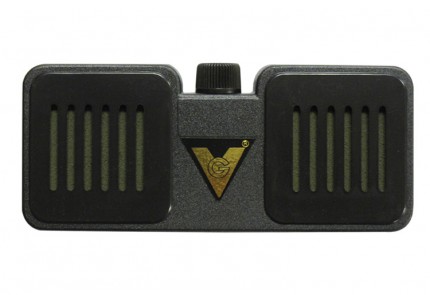
| Refillable Reservoir Cigar Humidifier | Watch Bezel Digital Hygrometer (Silver) | Medium Cigar Humidifier (Gold) |
Calibrating the device helps you understand whether its readings are reliable. It is especially useful when you purchase a new hygrometer, notice unexpected humidity fluctuations, or have not checked the instrument in several months.
What You Need to Calibrate a Hygrometer
The salt test is a simple method that can be performed at home without specialized equipment. Gather the following items:
-
Your humidor hygrometer
-
One or two teaspoons of ordinary table salt
-
A few drops of water
-
A small bottle cap or shallow container
-
An airtight plastic bag or sealed container
The key is to create a damp salt mixture without dissolving all the salt. This allows the enclosed environment to stabilize at approximately 75% relative humidity at room temperature.
How to Calibrate a Humidor Hygrometer: Step-by-Step
Step 1: Prepare the Salt Mixture
Place a teaspoon of table salt in a small, clean bottle cap or shallow dish. Add a few drops of water until the salt becomes damp and paste-like.
Avoid adding so much water that the salt dissolves completely or sits in a pool. Some undissolved salt should remain visible.
Step 2: Place the Hygrometer in a Sealed Container
Put the damp salt container and your hygrometer inside an airtight bag or container. Keep the two items separate so that water or salt cannot touch the sensor.
Seal the container completely. Outside air entering the enclosure can interfere with the test and affect the results.
Step 3: Wait for the Humidity to Stabilize
Leave the sealed container undisturbed for 8–12 hours at a stable room temperature. Keeping it away from direct sunlight, heaters, and air-conditioning vents helps reduce temperature fluctuations.
Do not open the container during this period. The salt mixture needs time to establish a stable humidity environment, and the hygrometer needs time to respond.
Step 4: Check the Reading
After the waiting period, read the hygrometer while the container is still sealed, if possible.
A correctly calibrated device should read approximately 75% RH. A reading of 70%, for example, indicates that the hygrometer may be reading five percentage points below the reference value.
Remember that the salt test checks the instrument against a reference point. It does not mean that your humidor itself should be maintained at 75% RH.
Step 5: Adjust the Hygrometer
If your hygrometer has a calibration feature, follow the manufacturer's instructions to adjust it to the reference reading.
Many analog models have a small adjustment screw at the back. Some digital models allow manual calibration through a button or settings menu.
If your device cannot be adjusted, record the difference and account for it when interpreting future readings. For example, if it consistently reads five percentage points low during the test, a displayed reading of 67% may indicate an actual humidity level closer to 72%.
Step 6: Return It to Your Humidor
Once the test is complete, return the hygrometer to your humidor and allow it to adjust to the conditions inside before relying on the reading.
Avoid making major humidity adjustments based on one measurement alone. Check the reading over time and look for a consistent pattern.
How Often Should You Calibrate a Humidor Hygrometer?
A practical approach is to test your hygrometer when you first purchase it and then recheck it every six months. You may want to check it sooner if the readings become inconsistent, the device experiences significant temperature changes, or you suspect a sensor problem.
Analog and digital hygrometers can both become inaccurate over time. Digital models may offer convenient adjustment features, while analog models sometimes require manual calibration. Always consult the manufacturer's instructions before attempting to change the settings.
If a hygrometer continues to produce erratic readings or has a large calibration error, replacing it may be more sensible than relying on repeated corrections.
Maintaining Consistent Humidity After Calibration
Calibration is only one part of humidor maintenance. Once you know your hygrometer is reasonably accurate, use it to monitor the conditions inside your storage setup.
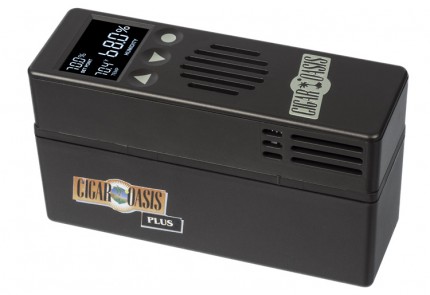
Choose suitable Cigar Humidifiers for your humidor's size and design. For electronic humidity control, options such as the Cigar oasis plus and Cigar oasis excel may suit different storage requirements. The Cigar oasis ultra is another option worth considering when evaluating electronic humidification systems.
 |
 |
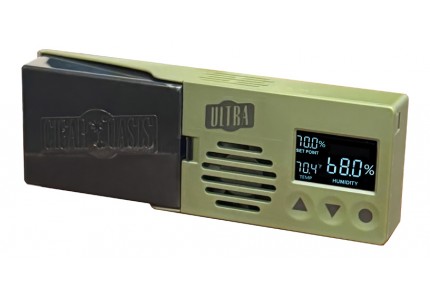 |
| Cigar Oasis Plus 3.0 Electronic Humidifier | Cigar Oasis Excel 3.0 Electric Humidifier | Cigar Oasis Ultra 4.0 Electronic Humidifier |
For a simpler moisture-management approach, Boveda packs provide a convenient way to help maintain a selected relative humidity level. Pairing a suitable humidity-control solution with reliable Digital hygrometers makes it easier to monitor conditions and recognize changes before they become a recurring problem.
Remember that every humidor behaves a little differently. Its size, seal, room temperature, frequency of opening, and number of cigars can all influence humidity stability. Give your setup time to settle after making changes rather than continually adjusting it in response to small fluctuations.
Keep Your Humidity Readings Reliable
A hygrometer is a small but important part of your cigar storage setup. Testing it with the salt method takes little effort and helps you understand whether the readings you rely on are accurate. With regular checks and a suitable humidity-control system, maintaining stable storage conditions becomes much easier.
Looking for a better way to manage humidor humidity?
Explore the humidity-control products at 1st Class Cigar Humidors, including electronic humidification systems and humidity-management accessories. Find the right solution for your setup and make humidity monitoring a more dependable part of your cigar storage routine.
 Digg.com
 Stumbleupon.com
 Del.icio.us
 Facebook
 Reddit.com